Wednesday, March 29, 2017

ONLY IN MY DREAM


ONLY IN MY DREAM

By Blaga Dimitrova
Translated by Ludmilla G Popova-Wightman
A meeting, ardent and tender
A pocket full of two whispering hands.
The wind whistles by our branch
and pushes hard to separate us.
Pressed to each other, we make space for it
at our side. We search each other’s eyes
for the saviour moon, drowning in clouds.
Close to us a rodent hollows a tree trunk.
Love, when did you turn into hate?
Deep in the pocket, a clenched fist.
Snakes hiss in our grey hair..
Our deaf hands don’t speak to each other
our wolf eyes turn away..
And only in my dream sometimes emerges
a tender moon, drowning in clouds.
Didn’t the rodent reach the tree trunk’s heart?

The Bulgarian poet Blaga Dimitrova (1922-2003) is the most loved and celebrated poet of her country. Her poems are intimate, subdued, thoughtful and caring. They are at once cerebral and sensual. I loved the below poem that shows the flowering and decadence of love through beautiful imageries and apt symbols.
(From Scars : Poems by Blaga Dimitrova , Ivy Press)

Thursday, March 23, 2017

The gift


The gift

By Herberto Padilla 

Translated by Alastair Reid and Andrew Hurley


I have bought these strawberries for you.
I wanted to bring you flowers,
but I saw a girl biting into
strawberries in the street
and the thick sweet juice
ran over her lips so that
I felt her avid warmth
was like yours,
the very image of love,
We have lived out years
struggling with sharp winds,
the ancient stench of ruins,
but always there was fruit,
the very simplest,
and there was always a flower.
So that even though these strawberries
are not the most important thing in the universe,
I know that they will swell your joy
like the glee of falling snow.
Our son smiling melts it in his hands
as God must do with our lives.
We have put on overcoats and boots,
and our numb red skin
is another image of the resurrection.
Creatures of the diaspora of our time,
Oh, give us, God, the strength to go on!


The name of Heberto Padilla is synonymous with the censorship and intolerance to intellectuals of the Castro regime in Cuba. For many writers in Latin America and Europe, the "Padilla affair" of 1971 marked the end of their support for the Cuban revolution because of the heavy-handed way it dealt with criticism and dissent expressed in one man's poems.

Born in Puerta de Golpe, in the western Cuban province of Pinar del Río, Padilla devoted himself to poetry from an early age. He was, at first, an enthusiastic supporter of the revolution which saw Fidel Castro and his guerrilla army sweep the dictator Fulgencio Batista from power in January 1959. However, Padilla soon began to take a more critical view of life in Castro's Cuba and in 1968 he was placed under house arrest. In 1971, as the political climate in Cuba worsened still further, he was interrogated for a month by the security police. A petition, signed by such prominent figures as Jean-Paul Sartre, Simone de Beauvoir and Susan Sontag, was organised to protest at Padilla's treatment. And, in a continent where the literary and the political were inextricably intertwined, a writer's position on the Padilla affair became an easy way of defining their sympathies.

In 1980, Senator Edward Kennedy secured his release to the US, where he was hailed as a hero by President Ronald Reagan.

This is a heart-warming poem .The poet, being a creature of the diaspora of our times, knows how to find joy in simple things in life. I have always thought that even the simplest gift can be made memorable so long as you can have nice story to wrap it . The strawberry here becomes a metaphor of joy that can lighten the sadness and sufferings of life.

(Source : Legacies : Selected Poems of Herberto Padilla published by Farrar. Straus. Giroux)


Thursday, March 16, 2017

A poem by Meng Chiao


A poem by Meng Chiao

Translated by David Hinton

Though few of our fellow humans grieve,
the birds and beasts all call out in sorrow,
and however senseless they seem at first,
they've reached into the depths of heaven.
No child means no tears when you sicken,
no father no one to suffer your memories.
Why separate family from everyone else?
To do it, people use the rites like a knife,
so you died alone, buried without mourners,
I kept lament to myself, hid this worry,
and let other hands lift you into the grave.
How can I praise their devotion now, your
sincerity? Lost, lost -- a childless old man
like another feather lost among the molt.

( Note: molt is a clutter of feathers left by birds)

Until the age of forty, Meng Chiao (A.D. 751--814) lived as a poet-recluse associated with Ch'an (Zen) poet-monks in south China. He then embarked on a rather unsuccessful career as a government official. After his retirement, Meng developed an innovative poetry style that made him a consummate poetry master. His is an experimental poetry of virtuosic beauty, a poetry that anticipated landmark developments in the modern Western tradition by a millennium. With the T'ang Dynasty crumbling, Meng's later work employed surrealist and symbolist techniques as it turned to a deep introspection. His late work is singular not only for its bleak introspection and "avant-garde" methods, but also for its dimensions.

I was reading a lot of his “Late Poems” tonight and this poem, steeped in immense sadness , about a loner captured my heart. It also made me think of the fate of millions of refugees severed from their near and dear by the tragedies of our times.


Saturday, December 3, 2016

My gaze is clear as a sunflower.


My gaze is clear as a sunflower

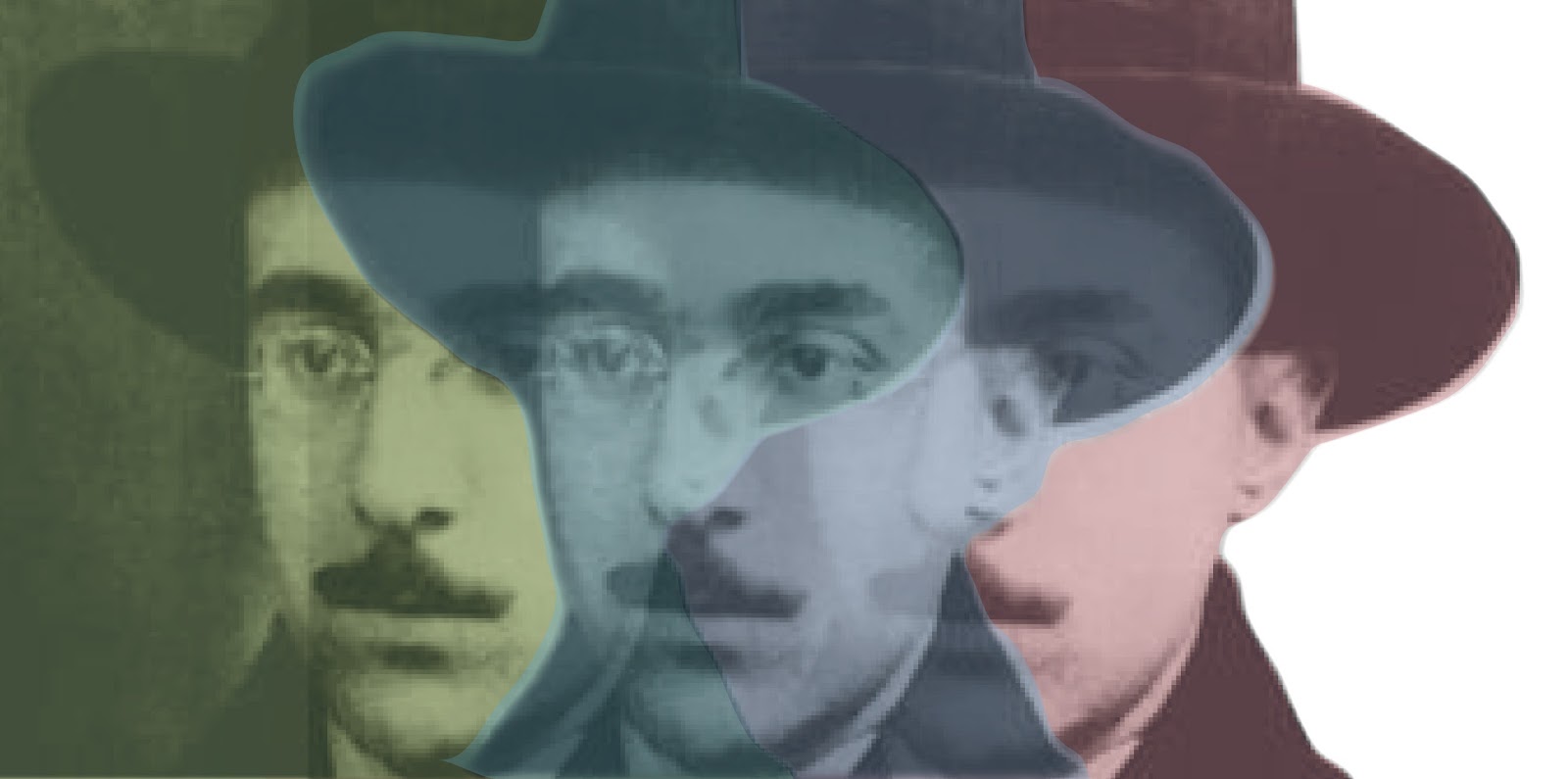
By Fernando Pessoa
Translated by Keith Bosley

My gaze is clear as a sunflower. 
It is my habit to walk along the roads
Looking right and left,
And from time to time looking back...
And what I see at any moment 
Is something that I have never seen before,
And I can notice very well...
I can know the essential wonder
A child knows if at birth 
It noticed it was actually being born...
I feel myself born at any moment 
To the eternal newness of the World...
I believe in the world like a marigold, 
Because I see it. But I don’t think about it
Because to think is to not understand...
The world was not made for us to think about it 
(To think is to have pain in the eyes) 
But for us to look at it and agree...
I have no philosophy: I have feelings...
If I speak of Nature it is not because I know what it is,
But because I love it, and this why:
Whoever loves knows what he loves
Nor why he loves, or what it is to love...
To love is eternal innocence,
And the only innocence is not to think...

Fernando Pessoa was Portugal's greatest poet of the twentieth century. This poem is sublime and it drives the message very clear –“ the only innocence is not to think”. The poet calls for an existence at one with the natural world around him, and see things as they are, without probing any underlying mystical or symbolic contents. It is like we becoming an intrinsic part of the natural world. We must, for instance,  learn to see a mountain not through our exaggerated thinking function but to see it only as a mountain – to see it as it is in order to be in modest harmony with it. This is a kind of lesson in unlearning. 

I think our whole problems stems from our vain and recalcitrant efforts to find answers as to why? The moment we turn into calm acceptance of what we see and experience, we usher in peace in our lives.


Friday, November 25, 2016

Off-Hand Poem


Off-Hand Poem
by Wang An-shih 

Translated by David Hinton

It’s a blessing, the ten thousand things
spoken. Don’t forget even a single line,
for I’m sending in these words a place
far from this loud world of confusion.

Wang An-shih (1021–1086 C.E.) was a remarkable figure — not only one of the great Sung Dynasty poets, but also the most influential and controversial statesman of his time. In his retirement, practicing Ch’an (Zen) Buddhism and wandering the mountains around his home, Wang An-shih wrote the poems that made his reputation. Short and plainspoken, these late poems contain profound multitudes — the passing of time, the rivers and mountains, silence and Buddhist emptiness. They won him wide acclaim in China and beyond across the centuries. And in David Hinton’s breathtaking translations, Wang feels like a major contemporary poet with deep ecological insight and a questioning spirit.

While not in the exalted ranks of such Chinese poets as Li Po, Tu Fu, Wang Wei, Wang’s poetry possesses the power to transport the reader to another time and place, far from our own “loud world.” How beautifully the poet echoes the strength of a relationship and its place in this world of confusion.


Thursday, November 24, 2016

Look for Me


Look for Me

By Vladislav Khodasevich
Translated by Peter Daniels

Look for me in spring's transparent air.
I flit like vanishing wings, no heavier than
a sound, a breath, a sunray on the floor;
I'm lighter than that ray – it's there: I'm gone.

But we are friends for ever, undivided!
Listen: I'm here. Your hands can feel the way
to reach me with their living touch, extended 
trembling into the restless flame of day.

Happen to close your eyelids, while you linger…
Make me one final effort, and you might
find at the nerve-ends of each quivering finger
brushes of secret fire as I ignite.


When the poet Vladislav Khodasevich fled the Soviet Union in 1922, he left behind a country that was, with every passing day, growing more ominous. And yet in finding a way out—and outliving many of his contemporaries—Khodasevich was nearly erased from the tumultuous literary history of Russia’s long twentieth century. The publication of his Selected Poems is an essential and long-overdue tribute to this extraordinarily gifted poet.

Born in 1886, Khodasevich came of age among the famed avant-gardists of Russian poetry, but unlike the major modernists of the age—the Symbolists and the Futurists among them—he sought inspiration neither in esoteric doctrines, nor in grand pronouncements. Instead, he was determined to find meaning in the world, and each of his poems reflects this tireless, often heroic, sometimes deeply bitter engagement with his surroundings.

An innovative classicist in an era taken in by relentless experimentation, Khodasevich was hailed by many of his peers in the Soviet Union and Berlin, including Vladimir Nabokov, who wrote that Khodasevich would “remain the pride of Russian poetry as long as its last memory lives.” Brilliantly translated by Peter Daniels, and with a richly informed introduction by Michael Wachtel, “Selected Poems” is a stunning confirmation of that assessment.

Look at Me is an intensely personal poem relating to the suicide of Khodasevich's friend, Muni (Samuil Viktorovich Kissin) in March, 1916. Muni had saved Khodasevich from suicide in 1911, and the latter "reproached himself terribly for being unable to save his friend in return". 

Look for Me filters the longing for connection with his dead friend obliquely, by making Muni himself the speaker. The monologue evokes a glimmering, edge-of-vision sense of his continuing but elusive presence – as "vanishing wings", "a sound, a breath, a sunray … ". While spring, of course, is the season of rebirth, the images of fire suggest that Muni's recovery for Khodaevich will be as painful as touching fire. The hands stretched into "the restless flame of day" in the second stanza are "trembling". Ultimately, if the dead man's presence is to be felt, it will be as tassels of fire at the poet's "quivering" finger-tips. Muni seems to plead for a return to life, but simultaneously demand a sacrifice from Khodasevich. There's an echo, perhaps, of Dante in Canto 27 of the Purgatorio, encouraged by Virgil to walk through fire as the necessary, cleansing prelude to attaining Paradise and reunion with Beatrice. However, the metaphysics are not Dante's. The longed-for meeting in “Look for Me” will be attained through an effort of imagination.

Khodasevich was a realist and a sceptic, even if some of his poems, like this one, reveal trace elements of the poetic movement that preceded him, Symbolism. “Look for Me” was written at a time of political turmoil, and perhaps its incipiently violent "flame" images and haunting sense of evanescence, connect it to a revolution which, for many writers of Khodasevich's generation, brought hope and dismay in rapid succession. But it also reminds us that love and grief are forces not to be extinguished by political events, and that the hardest battles in a warzone are not always the bloodiest.


Friday, September 30, 2016

From the Diary of an Almost-Four-Year –Old


From the Diary of an Almost-Four-Year –Old

By Hanan Mikha’il Ashrawi (Palestinian Poet)

Tomorrow, the bandages
will come off. I wonder
will I see half an orange,
half an apple, half my
mother's face
with my one remaining eye?

I did not see the bullet
but felt its pain
exploding in my head.
His image did not
vanish, the soldier
with a big gun, unsteady
hands, and look in
his eyes
I could not understand

I can see him so clearly
with my eyes closed,
it could be that inside our heads
we each have one spare set
of eyes
to make up for the ones we lose

Next month, on my birthday,
I'll have a brand new glass eye,
maybe things will look round
and fat in the middle—
I've gazed through all my marbles,
they made the world look strange.

I hear a nine-month old
has also lost an eye,
I wonder if my soldier
shot her too—a soldier
looking for little girls who
look him in the eye—
I’m old enough , almost four,
I've seen enough of life,
but she's just a baby
who didn't know any better.

Hanan Mikha’il Ashrawi is a prominent Palestinian academic, poet,  politician, and human rights activist. She became known worldwide for her efforts in Palestinian-Israeli negotiation toward peace.

Someone forwarded me an image of a Syrian girl shot in the eye and that is what triggered me to post this poem which I had read in an anthology of poems from the middle east titled ‘the flag of childhood’.


This is a touching, tender poem replete with moments of  artless innocence that shows the empathetic and mature  mindset of a  four-year-old child shot in the eye.